Five years in a tiny house
The internet has a tiny house problem.
Search for "tiny house build" and you'll find sun-drenched YouTube channels, dreamy Instagram grids, and an endless stream of articles claiming you can pull the whole thing off for under €10,000. What you won't easily find is what happens after the build—the five years of actual living, the things that go wrong, and the lessons you can't learn from a 12-minute video.
My partner and I built a tiny house in Lyon, spent five years living in it together, and I gave a talk about the experience at MiXiT 2019: From minimalism to building a Tiny House. Here's what I wish someone had told me before we started.
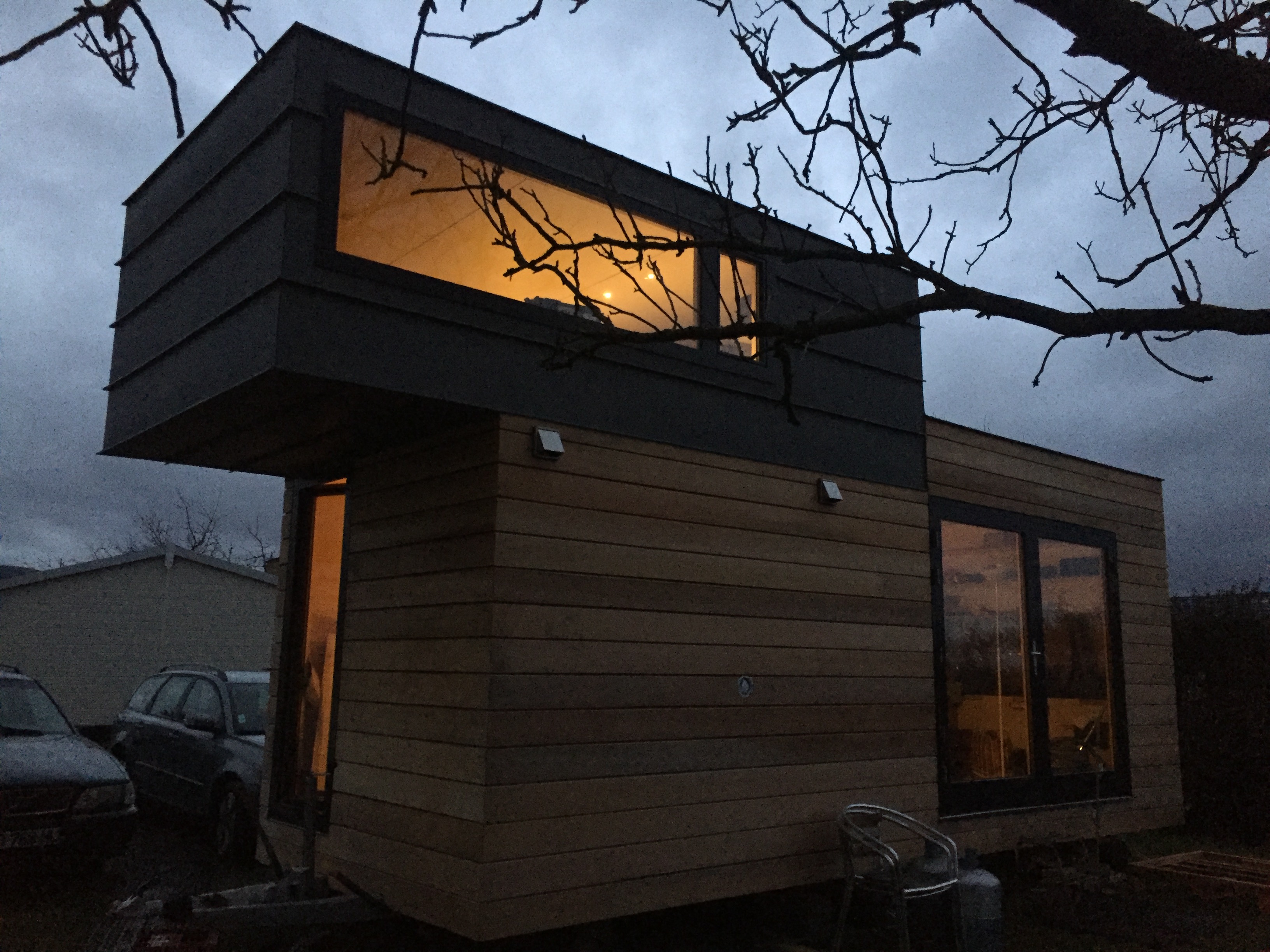
The energy numbers are real—and they're remarkable
Our annual cost for water, electricity, and gas for hot water came to roughly €400 a year. Total. For two people.
That's not a rounding error or a marketing claim. It's the actual figure, year over year. The physics work in your favour: a small volume loses heat slowly, gains it quickly, and doesn't take much energy to condition.
You start to understand what it means to heat a space with a candle. That's not a metaphor—it's almost literally true. The thermal mass is so small that body heat matters. Cooking raises the temperature. Once you've experienced that, it changes how you think about energy use in every building you ever enter again.
Everything you own is a decision
Living small forces a kind of intentional curation that sounds tedious until you realise it's mostly freeing.
Every object earns its place, or it doesn't come in. That changes how you evaluate purchases before you make them:
- Can this do more than one thing?
- Can it be stored compactly when not in use?
- Do I actually need all the functions it offers, or just one of them?
It sounds abstract until you're standing in a shop holding a set of towels, genuinely asking yourself: what is the minimum number of towels two people actually need? The answer, it turns out, is fewer than you think. Same for dishes, glasses, kitchen tools, clothing.
Clothing deserves its own mention. You become extremely thoughtful about what you buy, because there is no overflow space. Everything has to be worn, loved, and versatile. The capsule wardrobe isn't a Pinterest aesthetic—it's a practical necessity.
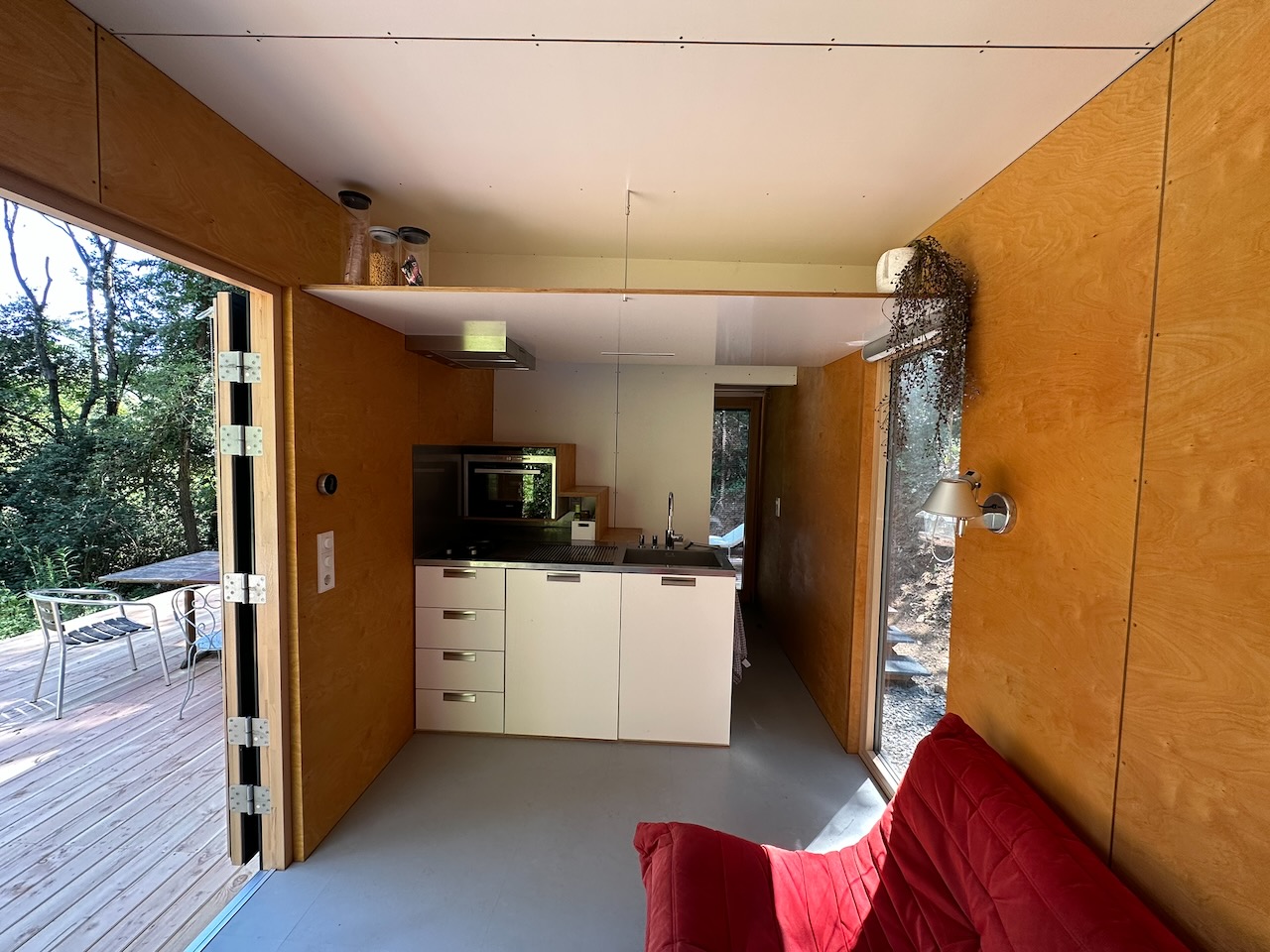
Cold is fine. Heat is the problem.
This surprises most people.
Winter in a tiny house is manageable. You don't need much heat to stay comfortable. The challenge isn't temperature—it's humidity. A small enclosed space with two people cooking and showering accumulates damp air faster than a conventional home. At some point we bought a dehumidifier, which helped, but the real solution is design: every source of humid air—the kitchen, the shower—needs to be extracted directly outside. Not recirculated. Not vented into an adjacent space. Out.
Some kitchen extractors recirculate air through a carbon filter. That's fine in a large kitchen. In a tiny house, it's a mistake.
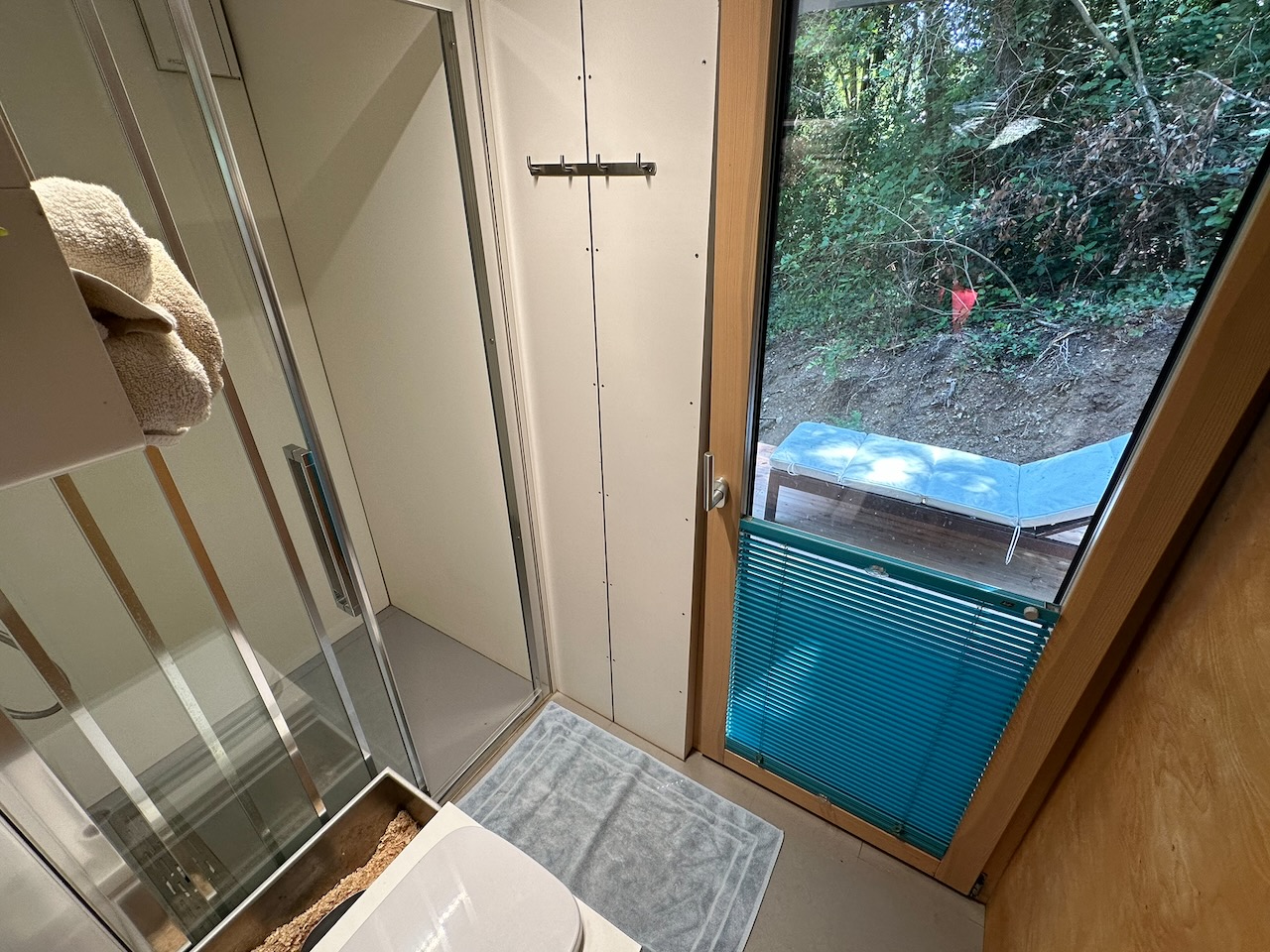
Summer is harder. The structure heats up with the outside temperature—sometimes a little beyond it. There's no thermal buffer, no basement coolness, no thick stone walls absorbing the heat of the day. You live at ambient temperature, plus a small premium. In a Lyon summer, that's uncomfortable in a way that no amount of good design fully solves. A shaded site helps. Cross-ventilation helps. But summer is the season you genuinely have to accept as a limitation.
The build will take longer and cost more than you think
Our build took one and a half years. That's before we moved in. It's a significant commitment of time, energy, and attention—especially if you're doing any of it yourself.
And about that €10,000 figure that circulates online: don't believe it. We spent many times that. Not because we were extravagant, but because a tiny house still needs to function as a home. That means:
- A real kitchen with real appliances (in small form factors, which often means specialist products—and specialist pricing)
- Plumbing, electrical, insulation
- A trailer or foundation
- All the small things that add up invisibly
Small does not mean cheap. In some ways it means the opposite: compact, high-quality, multipurpose products command a premium. You're not buying budget versions of things—you're buying the best small version of things, because you can't afford for them to fail or to take up more space than necessary.
Finding the right place is the hardest part
The build is a problem you can solve with time, money, and research. Finding the right location is harder—and in many ways more important.
Zoning laws, land access, utilities, neighbours, community acceptance: these vary enormously and change frequently. The tiny house movement has grown faster than the legal frameworks designed to accommodate it. In France especially, the regulatory landscape is complicated, and it shifts.
If I were starting again, I'd spend more time solving the land question before spending a single euro on construction. The best-built tiny house in the wrong place is a headache. A modest build in a good spot is a home.
Would I do it again?
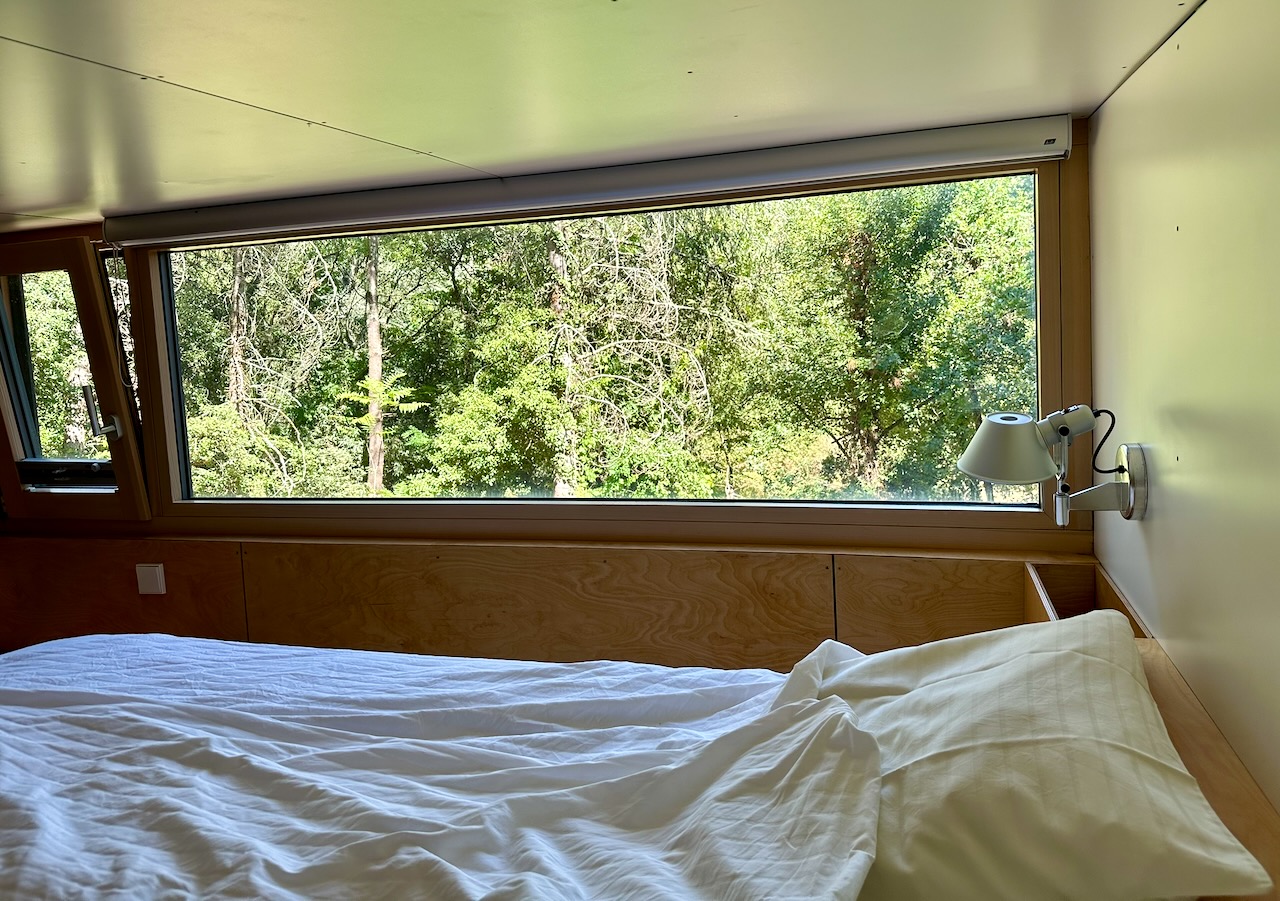
Yes.
It was one of the more formative experiences of my adult life. It changed how I think about possessions, energy, space, and what actually constitutes comfort. Those changes stuck—they didn't revert when we moved on.
The tiny house itself is now available to rent in the Ardèche, in a private forest on the border with the Drôme. If you're curious about the lifestyle but not ready to commit, that's a good way to find out if it's actually for you—before you build anything.